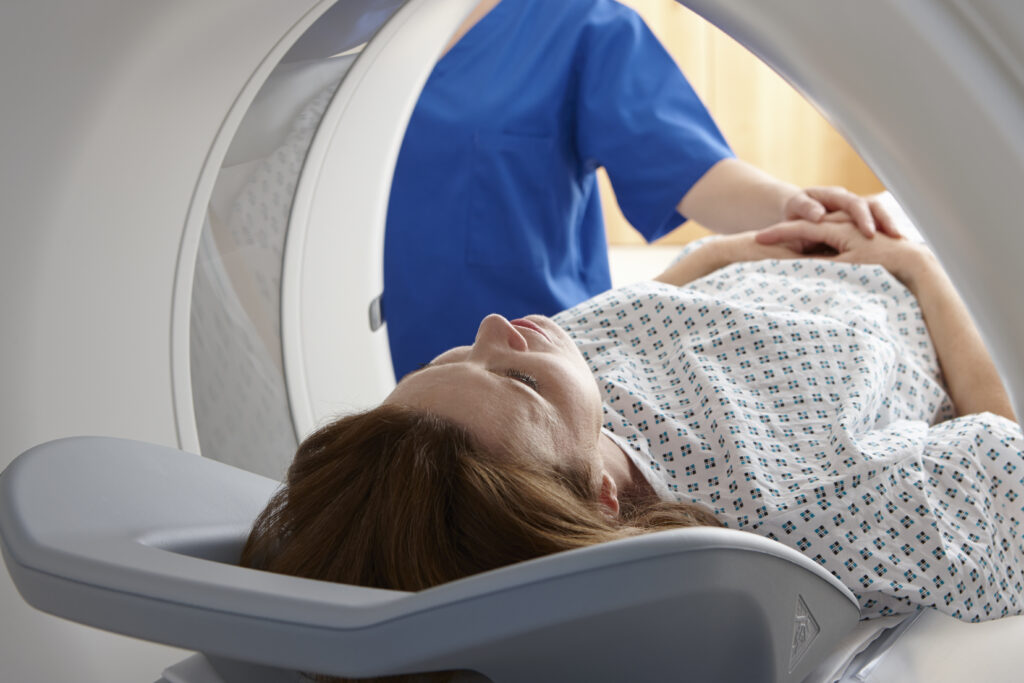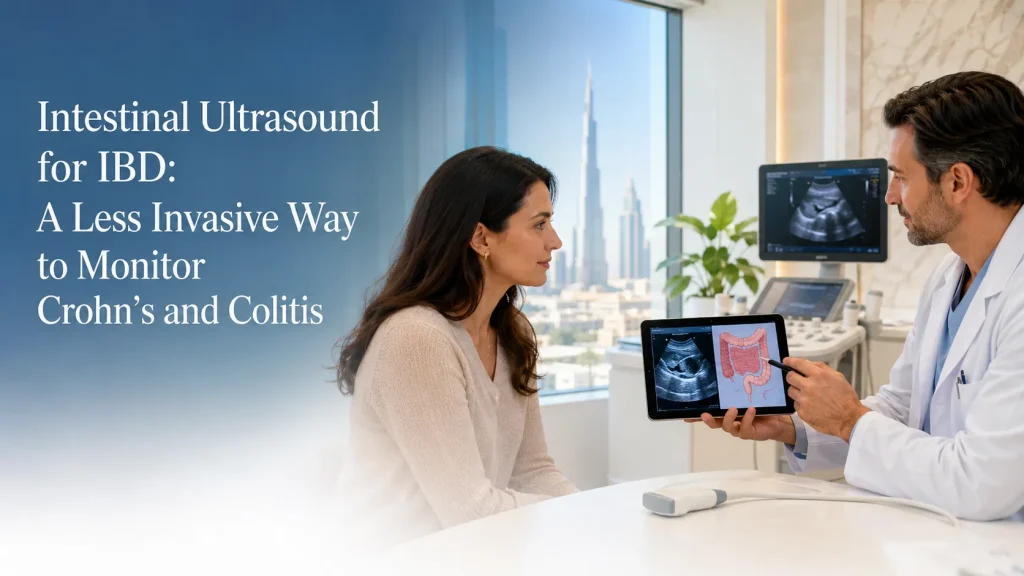
Intestinal ultrasound Dubai is a specialist imaging approach that may help monitor inflammatory bowel disease, including Crohn’s disease and ulcerative colitis. It uses ultrasound to assess the bowel wall and surrounding features without radiation.
This matters because IBD often needs repeated follow-up. Symptoms alone may not show the full picture. Some patients feel better while inflammation continues, while others may have symptoms from causes that are not active bowel inflammation.
Send us a Message
Gemelli Medical Centre lists intestinal ultrasound, also called bowel ultrasound, among its advanced diagnostic services within the Internal Medicine, Gastroenterology and Specialist Ultrasound department. The same department also highlights specialist care for Crohn’s disease and ulcerative colitis.
What Is Intestinal Ultrasound Dubai?
Intestinal ultrasound Dubai uses a probe on the abdomen to examine parts of the bowel in real time. The clinician may assess bowel wall thickness, blood flow, surrounding fat changes, bowel movement, fluid collections or complications when visible.
Unlike colonoscopy, intestinal ultrasound does not involve a camera entering the bowel. Unlike CT, it does not use ionizing radiation. This makes it useful as part of follow-up planning in selected patients.
A 2023 review describes intestinal ultrasound as a non-invasive, real-time, cross-sectional tool that can help assess disease activity in Crohn’s disease and ulcerative colitis.
Why IBD Monitoring Dubai Needs More Than Symptoms
IBD monitoring Dubai should not depend only on how the patient feels. Symptoms can fluctuate because of diet, stress, infection, irritable bowel overlap, medication changes or active inflammation.
Doctors may use several tools together, such as:
- Symptom review
- Physical examination
- Blood tests
- Stool inflammation markers
- Colonoscopy when needed
- MRI or CT in selected cases
- Intestinal ultrasound when appropriate
The goal is not just to treat symptoms. The goal is to understand whether inflammation is active, improving or worsening.
How Intestinal Ultrasound Supports Crohn’s Disease Follow-Up
Crohn’s disease can affect different bowel segments. Intestinal ultrasound may help monitor visible bowel inflammation and detect changes that require treatment review.
It may support follow-up by assessing:
- Bowel wall thickening
- Increased blood flow
- Strictures in selected cases
- Inflammatory masses or collections when visible
- Response to treatment over time
- Need for additional imaging or endoscopy
The AGA Clinical Practice Update states that intestinal ultrasound has emerged as a valuable tool for objectively assessing and monitoring IBD activity and offers a noninvasive, point-of-care option.
Ulcerative Colitis Follow-Up and Bowel Ultrasound
Ulcerative colitis affects the colon. Intestinal ultrasound may help selected patients by giving real-time information about bowel wall changes and disease activity.
However, it does not replace all other tests. Colonoscopy, stool markers, blood tests and clinical review may still be needed depending on the case.
The value of bowel ultrasound comes from using it inside a structured IBD care plan, not as a single stand-alone test.
When Doctors May Recommend Intestinal Ultrasound Dubai
Doctors may consider intestinal ultrasound Dubai for patients who need:
- IBD follow-up
- Treatment response monitoring
- Review after symptom flare
- Assessment of abdominal pain in known IBD
- Less invasive interim monitoring
- Support before deciding on colonoscopy or advanced imaging
- Ongoing Crohn’s disease or ulcerative colitis care
The decision depends on the patient’s diagnosis, symptoms, previous tests, medication, disease location and clinical risk.
At Gemelli, this pathway can be connected through internal medicine and gastroenterology specialist ultrasound, especially for patients who need digestive assessment and imaging in a coordinated visit.
Preparation for Intestinal Ultrasound
Preparation may differ by clinic protocol and patient case. Some intestinal ultrasound exams may need limited preparation, while others may involve fasting instructions.
General advice may include:
- Wear comfortable clothing
- Bring previous colonoscopy, MRI, CT or ultrasound reports
- Bring medication history
- Share recent stool or blood test results
- Explain current symptoms clearly
- Ask whether fasting is needed
- Tell the doctor about pregnancy possibility or recent surgery
Do not stop IBD medications unless your doctor specifically instructs you.
What Results May Show
An intestinal ultrasound report may describe bowel wall thickness, vascularity, visible inflammation, complications, fluid, strictures or technical limitations. The report may also recommend further tests when ultrasound cannot answer the full clinical question.
Your doctor should explain results in context. A scan finding is only one part of IBD management.
Red Flags for IBD Patients
Seek urgent medical care if you have:
- Severe abdominal pain
- Persistent vomiting
- High fever
- Blood in stool with weakness or dizziness
- Severe dehydration
- Marked abdominal swelling
- Fainting
- Symptoms after recent surgery
- Rapid deterioration during a flare
This article is educational and does not replace urgent medical care.
FAQ
Does intestinal ultrasound replace colonoscopy?
No. It can support monitoring, but colonoscopy may still be needed for diagnosis, biopsies, cancer surveillance or detailed mucosal assessment.
Is intestinal ultrasound painful?
It is usually well tolerated. Some patients may feel pressure from the probe over tender areas.
Is bowel ultrasound useful for Crohn’s disease?
It may be useful for selected patients, especially when visible bowel segments need follow-up over time.
Can it monitor ulcerative colitis?
It may support monitoring in selected cases, but doctors still use symptoms, blood tests, stool markers and colonoscopy when needed.
Final Takeaway
Intestinal ultrasound Dubai may support less invasive monitoring for selected patients with Crohn’s disease or ulcerative colitis. Its value is strongest when doctors use it together with symptoms, lab tests, stool markers, previous imaging and specialist review.
To discuss whether bowel ultrasound is suitable for your case, you can book an intestinal ultrasound consultation with Gemelli Medical Centre.
 English
  Arabic