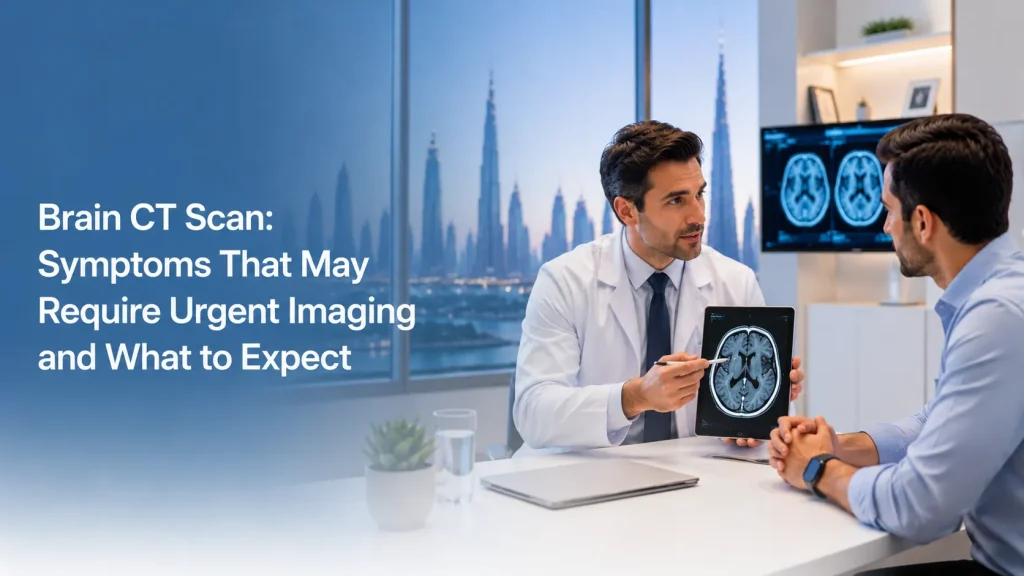
A brain CT scan Dubai appointment may be requested when doctors need fast, detailed imaging of the head, brain, skull, or nearby structures. It can help assess head injury, severe headache, dizziness, stroke-like symptoms, bleeding, tumors, fractures, or other urgent neurological concerns.
A head CT uses computed tomography to create cross-sectional images. These images give doctors more detail than a standard x-ray, especially when they need to assess bone, blood, soft tissue, or urgent brain changes. RadiologyInfo explains that head CT can help assess head injuries, severe headaches, dizziness, aneurysm symptoms, bleeding, stroke, and brain tumors.
أرسل لنا رسالة
مركز جيميللي الطبي lists Head/Brain CT among the key examinations offered through its Precision Radiology department in Jumeirah. The same page also highlights a dual-source CT scanner, coordinated reporting, and clear pre-test instructions.
What Is a Brain CT Scan?
A brain CT scan, also called a head CT scan, uses x-rays and computer processing to create detailed images of the head. Doctors may use it to examine the brain, skull, sinuses, facial bones, and blood-related findings when clinically needed.
The test is usually quick. This matters in urgent situations, because doctors often need fast information before deciding the next step.
When Doctors May Request Brain CT Scan Dubai?
Doctors may request a brain CT scan Dubai pathway when symptoms or injury suggest the need for urgent imaging.
Common reasons include:
Head injury after a fall or accident
Sudden severe headache
New weakness or numbness
Confusion or sudden mental status change
Dizziness with concerning symptoms
Suspected bleeding inside the brain
Stroke-like symptoms
Seizure with new neurological signs
Facial or skull trauma
Follow-up of known brain or skull findings
RadiologyInfo notes that doctors use head CT to detect bleeding, brain injury, skull fractures, blood clots or bleeding linked to stroke symptoms, tumors, hydrocephalus, and certain skull diseases.
Brain CT for Headache: When Is It More Urgent?
Most headaches do not need emergency imaging. But some headache patterns need fast medical attention.
Seek urgent care if a headache is:
Sudden and severe
Linked with weakness or speech difficulty
Associated with fainting or confusion
New after head trauma
Accompanied by fever and neck stiffness
Different from your usual headache pattern
Associated with vision changes or seizures
This article is educational. It should not delay emergency assessment.
How to Prepare for Head CT Scan Dubai?
Preparation depends on whether the scan needs contrast.
General preparation may include:
Wear comfortable clothing
Remove jewelry, hairpins, eyeglasses, or metal items
Bring previous scans and reports
Share your medication list
Tell the team about allergies
Mention kidney disease, diabetes, thyroid disease, asthma, or heart disease
Tell the team if pregnancy is possible
Ask whether fasting is needed if contrast will be used
RadiologyInfo states that patients may need to avoid food or drink for a few hours before contrast CT, and should discuss medications, allergies, recent illness, and medical conditions before the exam.
What Happens During the Scan?
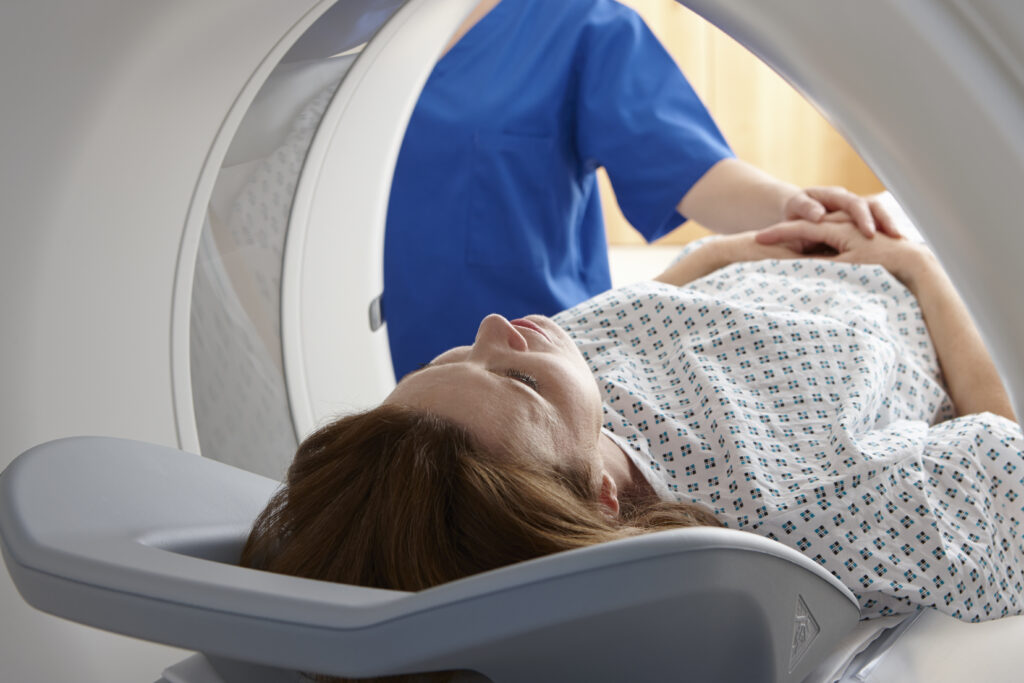
During the scan, you lie on a CT table. The technologist positions your head carefully and may use supports to help you stay still.
The table moves through the scanner while the machine takes images. You need to remain still because movement can blur the images.
If contrast is required, the team places an IV line. Some patients feel warmth or a metallic taste during contrast injection. This usually passes quickly.
Why CT Technology Matters?
Head CT imaging needs speed and clarity. This becomes more important when the patient feels pain, anxiety, dizziness, or difficulty staying still.
Gemelli patients can access an advanced CT scan center in Dubai</a> where the radiology pathway aims to connect imaging with the clinical question. The center also highlights the Siemens Somatom Force Dual Source CT scanner, which supports fast high-definition imaging.
What Can Brain CT Results Show?
A brain CT report may describe:
Bleeding
Skull fracture
Brain swelling
Stroke-related changes
Tumor-related findings
Sinus or facial bone changes
Hydrocephalus
Need for follow-up imaging
A radiologist interprets the scan. Your doctor then explains what the findings mean for your symptoms and next step.
FAQ
Is a brain CT scan painful?
No. The scan itself should not hurt. You may feel brief discomfort if contrast requires an IV line.
Does every brain CT need contrast?
No. Many head CT scans do not use contrast. Doctors decide based on the clinical question.
How long does a head CT take?
The scan is usually quick. The full visit takes longer because the team prepares you and checks image quality.
Should I bring previous brain scans?
Yes. Previous scans help doctors compare findings and avoid unnecessary repetition
 English
  Arabic